
Via Ferrata Dolomites: Guided Routes & Modular Alpine Programs
Customised Hut-to-Hut Trekking with a Local Mountain Guide
Via ferrata Dolomites offer one of the most complete and rewarding ways to explore the alpine landscape of northern Italy. Nowhere else in the Alps combines such a high concentration of equipped routes with dramatic rock formations, historic itineraries, and long high-altitude traverses.
The Dolomites are the birthplace of modern via ferrata, with routes originally built during World War I and later developed into a unique alpine network. Today, via ferrata in the Dolomites range from short panoramic climbs suitable for beginners to demanding multi-day itineraries connecting mountain huts across different groups.
This page provides a clear overview of via ferrata Dolomites experiences, focusing on route types, difficulty progression, logistics, and modular guided programs that can be adapted from 2 to 10 days.
This program is organised and led by UIAGM/IFMGA certified mountain guide Roberto Iacopelli, founder of Discovery Dolomites. As a local guide based in Bolzano, I specialise in customised via ferrata trekking itineraries in the Central Dolomites.
Learn more about Roberto Iacopelli – UIAGM/IFMGA Mountain Guide
What is a via ferrata?
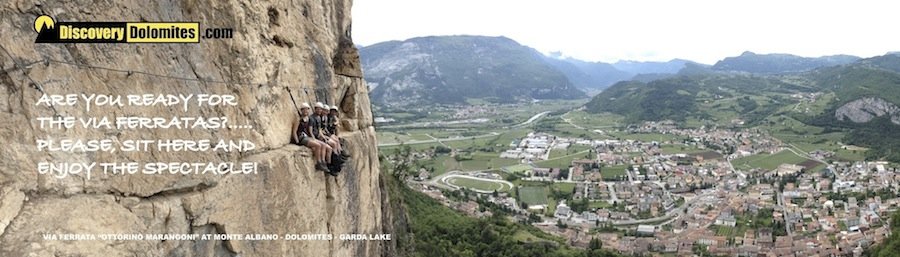
A via ferrata is a protected mountain route equipped with steel cables, ladders, stemples, and fixed anchors that allow climbers to move safely across steep and exposed terrain. Unlike rock climbing, progression is not based on rope techniques but on clipping into the fixed cable using specific via ferrata equipment.
Via ferrata difficulty levels in the Dolomites
When is the best season for via ferrata in the Dolomites?
Guided vs self-guided via ferrata
Logistic basic information
Bolzano is widely considered the most practical and strategic base for exploring via ferrata in the Dolomites.
Thanks to its central position and excellent transport connections, it allows easy access to a wide range of via ferrata areas across the entire Dolomites region, both for single-day routes and multi-day programs.
The map above illustrates the main travel routes to Bolzano from the nearest international airports, followed by direct and efficient train connections. Airports such as Munich, Verona, Venice, and Innsbruck are all well connected to Bolzano, making arrival in the Dolomites straightforward even for travelers without a rental car.
Once in Bolzano, transfers to the main Dolomites valleys are short and flexible. From here it is possible to reach the Central Dolomites, the Catinaccio / Rosengarten, the Sella Group, the Brenta Dolomites, and many other via ferrata areas within reasonable driving times. This central location reduces daily transfers and allows itineraries to be adapted easily according to weather conditions and route availability.
For this reason, Bolzano represents an ideal base not only for introductory via ferrata routes, but also for complex and multi-day via ferrata Dolomites programs that require mobility and logistical flexibility.

The map of the modular program
The map below provide a clear overview of the modular structure of the via ferrata Dolomites programs presented on this page.
Rather than following a single fixed route, the itineraries are designed as flexible modules that can be combined according to technical level, available time, and current mountain conditions.
The map focuses on how individual via ferrata routes and areas can be linked together into multi-day or customized programs.
The detailed itineraries of the single days and route combinations are presented below, where each program is explained individually.

My modular Via Ferrata Program in the Dolomites (2–10 Days)
The via ferrata Dolomites program presented below is conceived as a modular itinerary, ranging from 2 to 10 days, and designed to be adapted to different experience levels, time availability, and mountain conditions.
Each day represents a stand-alone module that can be combined with others to create a coherent multi-day via ferrata tour across different areas of the Dolomites. The sequence of the days, the choice of routes, and the overall duration can be adjusted according to technical ability, fitness, weather conditions, and logistical requirements.
Below, each day is described individually, including detailed technical information such as approach time, climbing time, transfers between huts, total duration, and elevation gain. This structure allows you to clearly understand the demands of each stage and how the entire program can be built step by step.

DAY 1: Via Ferrata Roda de Vaèl
Walking time for the approach: 1.30 hrs
Climbing time: 2.30 hrs
Walking time for the next Rifugio: 1.30 hrs
Total time of this day: 6.30 hrs – Total vertical gain (up): 765 m.
The first day of the via ferrata Dolomites program introduces the characteristic rock formations and open scenery of the Catinaccio / Rosengarten area.
Starting from your accommodation, we reach Karer Pass by local bus; for single-day programs, transfers are usually arranged with the mountain guide’s vehicle. From Karer Pass, the Paolina chairlift allows a rapid gain in altitude, bringing us close to the alpine environment where the route begins. A short hike leads toward Rifugio Roda di Vaèl, where the Via Ferrata Roda di Vaèl starts.
This via ferrata is an excellent introduction to the Dolomites: technically straightforward, well equipped, and not excessively exposed, making it suitable for beginners with good fitness or as a warm-up day at the beginning of a multi-day itinerary. The route offers wide views over the surrounding peaks and a gradual progression that helps build confidence on equipped terrain.
After completing the via ferrata, the descent leads to the Vajolon Pass, followed by an easy traverse to Rifugio Fronza alle Coronelle, where the day concludes.

DAY 2: Via Ferrata Santner
Walking time for the approach: 0.40 hrs
Climbing time: 2.30 hrs
Walking time for the next Rifugio: 3.30 hrs
Total time of this day: 6.40 hrs – Total vertical gain (up): 751 m.
The second day continues through the heart of the Catinaccio / Rosengarten massif, following one of its most classic and scenic equipped routes.
Starting directly from Rifugio Fronza alle Coronelle, a short approach leads to the beginning of the Via Ferrata Santner. The route ascends toward the Santner Pass, where Rifugio Santner is located, offering a spectacular panoramic position at the edge of the central towers of the Rosengarten.
After completing the via ferrata, the itinerary continues on high-level alpine paths toward Rifugio Re Alberto and then onward to Rifugio Principe. This stage combines sustained ferrata sections with longer hiking traverses, creating a varied day that links several historic mountain huts in one continuous high-altitude journey.
Day 2 represents a natural progression from the previous stage, increasing the sense of immersion in the Dolomites’ alpine environment while maintaining a balanced technical difficulty.

DAY 3: Via Ferrata Antermoja
Walking time for the approach: 0.10 hrs
Climbing time: 4.00 hrs
Walking time for the next Rifugio: 2.30 hrs
Total time of this day: 6.40 hrs – Total vertical gain (up): 657 m.
The third day marks a transition into a more sustained and alpine stage of the via ferrata Dolomites program.
Starting from Rifugio Principe, the route quickly reaches the beginning of the Via Ferrata d’Antermoja, one of the longest climbing sections of the itinerary. The ascent is continuous and varied, offering a rewarding progression on equipped rock in a high-mountain environment.
After completing the via ferrata, the itinerary descends on the opposite side of the massif, leaving the rocky towers behind and gradually opening onto broader landscapes. A longer traverse leads to Rifugio Alpe di Tires, located near the edge of the Alpe di Siusi plateau.
This stage creates a clear geographical and visual contrast with the previous days, linking the vertical world of the Rosengarten to the wide alpine pastures below.

DAY 4: Via Ferrata Maximiliansteig
Walking time for the approach: 0.20 hrs
Climbing time: 2.30 hrs
Walking time for the next Rifugio: 4.00 hrs
Total time of this day: 6.50 hrs – Total vertical gain (up): 448 m.
Day 4 offers a different type of via ferrata experience, characterized by an exposed ridge itinerary and wide panoramic views.
Starting from Rifugio Alpe di Tires, the route climbs directly onto the Via Ferrata Maximiliansteig, a classic Dolomites via ferrata that follows a narrow and airy crest. The progression is continuous and scenic, with exposure playing a central role throughout the ascent.
After completing the ferrata, the descent follows the opposite side of the ridge, returning briefly to Rifugio Alpe di Tires. From here, the itinerary continues across the Udai Valley on hiking paths, gradually changing scenery from rocky terrain to open alpine landscapes.
The day concludes at Rifugio Sassopiatto (Plattkofelhütte), where the long traverse provides a satisfying sense of progression within the Dolomites.

DAY 5: Via Ferrata Schuster
Walking time for the approach: 2.00 hrs
Climbing time: 2.30 hrs
Walking time for the next Rifugio: 3.00 hrs
Total time of this day: 7.30 hrs – Total vertical gain (up): 875 m.
The fifth day is one of the most demanding stages of the via ferrata Dolomites program, combining a longer approach, a classic ferrata route, and extended high-mountain traverses.
Starting from Rifugio Sassopiatto, the itinerary heads north toward Sasso Piatto peak and Rifugio Vicenza, gaining altitude through a steady ascent before reaching the start of the Via Ferrata Schuster. The route offers an engaging and sustained climb, rewarding the effort with impressive views over the surrounding Dolomites.
After completing the via ferrata, the descent leads back toward Rifugio Sassopiatto, from where the itinerary continues toward Rifugio Valentini or Rifugio Friedrich August, located near Sella Pass. This stage links different mountain groups and creates a natural transition toward the Sella area.

DAY 6: Via Ferrata Meisules
Walking time for the approach: 0.45 hrs
Climbing time: 3.00 hrs
Walking time for the next Rifugio: 3.00 hrs
Total time of this day: 6.45 hrs – Total vertical gain (up): 728 m.
Day 6 takes place in the heart of the Sella Group, one of the most iconic and imposing mountain massifs of the Dolomites.
Starting from Rifugio Valentini or Rifugio Friedrich August, the itinerary reaches the start of the Via Ferrata Meisules, a classic and continuous route that traverses the impressive rocky architecture of the Sella massif. The ascent offers sustained climbing sections and an immersive high-alpine atmosphere, with long traverses across steep rock walls.
After completing the via ferrata, the route continues across the crags of the Sella Group toward Pordoi Saddle, gradually opening to wide views over the surrounding Dolomites. The descent leads to Hotel Savoia at Pordoi Pass, the oldest hotel in the Central Dolomites—a historic building dating back to the pre-tourism era and a remarkable witness to the early days of alpine travel.

DAY 7: Via Ferrata Piazzetta
Walking time for the approach: 1.20 hrs
Climbing time: 2.30 hrs
Walking time for the next Rifugio: 3.00 hrs
Total time of this day: 6.50 hrs – Total vertical gain (up): 1106 m.
Day 7 is one of the most intense and vertical stages of the via ferrata Dolomites program, offering a powerful alpine experience in the Sella Group.
Starting from Hotel Savoia at Pordoi Pass, the approach leads to the base of the Via Ferrata Piazzetta, one of the most famous and physically demanding via ferrata routes in the Dolomites. The ascent is steep and sustained, requiring good fitness and confidence on exposed terrain, and rewards the effort with exceptional views over the surrounding peaks.
After completing the via ferrata, the route returns to Pordoi Pass, where the character of the day changes from vertical climbing to a panoramic high-level traverse. The itinerary then follows the historic Viel del Pan path, leading to Rifugio Viel del Pan or, alternatively, to Rifugio Castiglioni at Fedaia Pass, depending on the chosen overnight option.
This stage combines one of the most iconic via ferrata routes in the Dolomites with a long and scenic traverse, marking a memorable highlight of the entire program.

DAY 8: Via Ferrata Trincee
Walking time for the approach: 1.30 hrs
Climbing time: 3.30 hrs
Walking time for the next Rifugio: 1.00 hrs
Total time of this day: 6.00 hrs – Total vertical gain (up): 528 m.
Day 8 combines alpine terrain with a remarkable historical dimension, following one of the most fascinating World War I via ferrata routes in the Dolomites.
Starting from Rifugio Viel del Pan or Rifugio Castiglioni, the approach leads to the beginning of the Via Ferrata delle Trincee, an exceptional route that follows original First World War military trenches. Built by the Kaiserjäger, the Austrian mountain troops, between 1914 and 1918, this via ferrata preserves tunnels, ledges, and fortified sections carved directly into the rock.
The ascent offers a unique combination of exposed passages, historic structures, and wide panoramic views over the surrounding valleys. After completing the via ferrata, the route descends on the opposite side of the mountain to Rifugio Passo Fedaia, where the day concludes.
This stage stands out not only for its alpine character, but also for the rare opportunity to climb through a preserved open-air museum of Dolomites mountain warfare.

DAY 9: Via Ferrata Eterna
Walking time for the approach: 0.30 hrs
Climbing time: 4.00 hrs
Walking time for the next Rifugio: 2.00 hrs
Total time of this day: 6.30 hrs – Total vertical gain (up): 893 m.

Day 9 takes place on the highest mountain of the Dolomites, offering a demanding and memorable high-altitude via ferrata experience on the Marmolada massif.
Starting from Rifugio Passo Fedaia, the itinerary ascends the historic Via Ferrata Eterna, built by the Alpini (Italian mountain troops) and leading toward the Marmolada Serauta area. The route is long and sustained, developing in a severe alpine environment where altitude, exposure, and weather conditions play a decisive role.
After completing the via ferrata, the descent continues across the Marmolada di Rocca glacier, introducing a glaciated section that adds a true high-mountain character to the day. The stage concludes at the new Rifugio near the old Rifugio Pian dei Fiacconi, located beneath the imposing south face of the Marmolada.
This day represents one of the most alpine and demanding stages of the via ferrata Dolomites program, combining historic routes, altitude, and glacial terrain.

DAY 10: Via Ferrata Marmolada West Crest
Walking time for the approach: 1.50 hrs
Climbing time: 3.00 hrs
Walking time back to the starting point: 2.00 hrs
Total time of this day: 6.50 hrs – Total vertical gain (up): 643 m.
The final day of the via ferrata Dolomites program leads to the highest summit of the Dolomites, offering a fitting conclusion to a demanding alpine journey.
Starting from Rifugio Pian dei Fiacconi, the route ascends toward Marmolada Punta Penia (3,343 m) along the west ridge, following the Via Ferrata di Punta Penia. The ascent develops in a true high-mountain environment, where altitude, glacial terrain, and exposure define the character of the climb.
Reaching the summit of Punta Penia marks a major alpine achievement and the highest point of the entire itinerary. The descent follows the main Marmolada glacier, returning to Rifugio Pian dei Fiacconi. From here, the program concludes with the transfer back to Bolzano.
This final stage represents the culmination of the via ferrata Dolomites experience, combining altitude, glacial travel, and one of the most iconic summits of the Alps.

Program conclusion and customization
The via ferrata Dolomites itinerary described above represents one possible combination of a modular program that can range from 2 to 10 days, depending on experience level, available time, and mountain conditions.
Each stage can be adapted, shortened, extended, or replaced in order to create a balanced itinerary that matches technical ability, fitness, and personal interests. Single-day via ferrata routes can be combined with multi-day traverses, different accommodation options, or rest days, allowing a high degree of flexibility throughout the program.
Because weather conditions, snow cover, and seasonal factors play a crucial role in the Dolomites, the final structure of the itinerary is always defined close to the departure date, ensuring the best possible conditions and a safe progression. Guided via ferrata programs allow this flexibility, making it possible to adjust the route selection day by day.
This modular approach ensures that every via ferrata Dolomites experience remains both technically appropriate and truly alpine, while preserving the continuity and logic of a complete mountain journey.
This page is intended as a comprehensive reference for via ferrata Dolomites planning, from logistics and route selection to multi-day guided itineraries.
For additional information about how my guided programs work, feel free to visit the complete FAQ page:


The best Dolomites Via Ferrata: explore at 360° the Dolomites areas with this program
 A perfect solution to explore the Dolomites areas, every day in a different valley, but with the commodity to stay in Bolzano, the amazing town of the centre of the extended Dolomites territory.
Via delle Bocchette: the most classical concatenation of via ferratas of the Brenta
 The "Via delle Bocchette" was open on the 1937, it was the first via ferrata trek of the Dolomites. Today is one highlight target for every international via ferrata climber! Simply "mandatory"....
Via Ferrata Courses: are you a total beginners? This is your best solution!
 Customised courses from a single day to more articulated days, from easy climbs to the maximal expression of difficult on via ferrata. Your choose now is open!
Via Ferrata at Lake Garda and Arco: a perfect solution for the winter months
 In the Lake Garda and Arco western Dolomites areas, on the low elevation Sarca valley, exist a particular micro-clima similar at the typical mediterranean clima. Here is possible climb lot of via ferrata in winter or autumn an early spring.
Via Ferrata in the Cortina area: discover these amazing eastern Dolomites
 Cortina on the eastern Dolomites is a classic target for many international climbers, don't miss the opportunity to dicover these great walls with the many via ferratas of this area of the Dolomites.
Via Ferrata trek in the southern Dolomites: an target for hard hikers
 The souther Dolomites are traditionally wild and very steep mountains, the Pale di San Martino are the most representitive group of these mountains, read more.....
Via Ferrata at the great Civetta Peak: the most impressive and biggest wall
 Climbing the great Civetta north ridge along the Via Ferrata degli Alleghesi is a unique experience possible in two days with one night on the Rifugio Torrani on the top, logically it's reserved only at trained hikers. Are you ready for thsi adventure? Read more....
Via Ferrata program for families with kids: a great combination of activities
 Finally a program dedicated at families with kids! Different activities organised for this particular exigences in total flexible and costumized form. Read more....
Via Ferrata WW1: climb the original via ferrata builded during the First World War
 About 100 (of the actual 600) via ferratas was builded during the First Word War. Today is very interesting climb these via ferratas along suspended bunkers and incredible exposed trenches. Customised proposals for everybody!


An excellent collaboration network with personalized management.
via-ferrata-dolomites.com is part of an established network of specialized websites focused on the Dolomites.
I have been working closely with Ulrich Schwingshackl, UIAGM mountain guide since 2019. Together we coordinate guided tours, enquiries and tour planning across our network of specialized Dolomites websites
We are increasingly combining our experience, tour planning, and personal support under one umbrella.
Our network in the Dolomites
Four specialized websites. Two experienced UIAGM mountain guides. One shared platform.
Behind klettern-dolomites.com, discoverydolomites.com, via-ferrata-dolomites.com, and ski-safari-dolomites.com are Ulrich Schwingshackl and Roberto Iacopelli. Ulrich has been a UIAGM mountain guide since 1995, and Roberto since 2005.
Together, we bring over 50 years of experience in the Dolomites.
Each website has a clear professional focus; the underlying common structure is continuously being expanded.


klettern-dolomiten.com
German-speaking · Learning & Technique
klettern-dolomiten.com is our German-language platform for guided via ferratas, alpine climbing tours, and hut-to-hut hikes in the Dolomites. We focus on tours with an educational component – improving technique, using equipment correctly, and learning on the mountain.
International guests can also quickly send inquiries and easily book selected tours via the English-language section.
The platform of klettern-dolomiten.com is closely connected with discoverydolomites.com, via-ferrata-dolomites.com and ski-safari-dolomites.com under our shared structure of Dolomites guides websites.
via-ferrata-dolomites.com
Everything you need to know about the via ferratas of the Dolomites
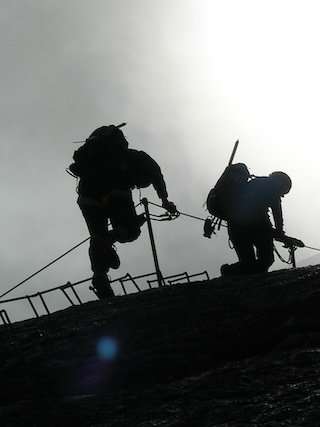
via-ferrata-dolomites.com is our English-language platform specialized in via ferrata in the Dolomites. Alongside guided tours, it offers an extensive knowledge library covering via ferrata routes, difficulty ratings, equipment, safety, preparation, mountain huts and multi-day via ferrata tours. From total beginners to exigent experts: via-ferrata-dolomites.com have programs and ideas for everybody.
The platform of via-ferrata-dolomites.com is closely connected with klettern-dolomiten.com, discoverydolomites.com and ski-safari-dolomites.com under our shared structure of Dolomites guides websites.
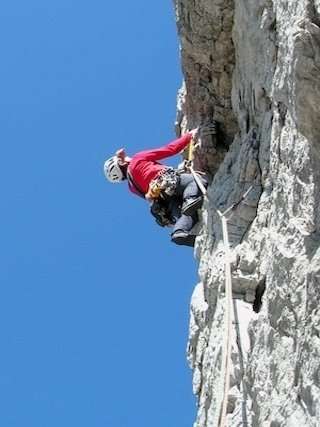
discoverydolomites.com
Climbing and hiking in the Dolomites
discovery-dolomites.com is our comprehensive English-language platform for mountain experiences in the Dolomites. Alpine climbing, hiking, trekking, hut-to-hut tours are major focus, complemented by via ferrata and other guided mountain activities.
Alongside guided tours, DiscoveryDolomites.com provides an extensive knowledge and information library about the Dolomites, with information on tours, routes, preparation and practical trip planning.
The platform of discoverydolomites.com is closely connected with klettern-dolomiten.com, via-ferrata-dolomites.com and ski-safari-dolomites.com under our shared structure of Dolomites guides websites.
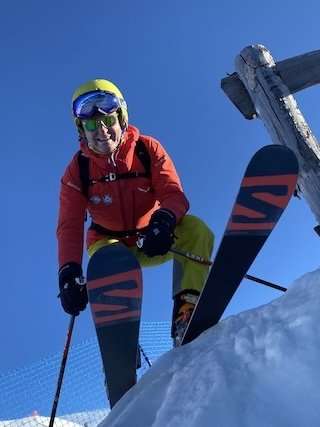
ski-safari-dolomites.com
Everything you need to know about Ski Safaris in the Dolomites and more
ski-safari-dolomites.com is our platform dedicated to winter activities in the Dolomites and selected regions of the Alps. A particular focus is on ski safaris – multi-day journeys on skis, connecting different ski areas and staying in carefully selected mountain huts or hotels along the way.
The program also includes guided ski touring and freeride experiences for different levels. SkiSafariDolomites.com is a partner of Dolomiti Superski.
The platform of ski-safari-dolomites.com is closely connected with klettern-dolomiten.com, discoverydolomites.com, via-ferrata-dolomites.com and under our shared structure of Dolomites guides websites.